Women’s tops · Vile Parle West, Mumbai

The Journal · An Essay

The Art of
Women’s Fashion

How a simple garment for the upper body became one of the most expressive pieces in a woman’s wardrobe — from the working smock to the satin wrap.

Options Mall JournalA history of the top & blouseApprox. 12 minute read
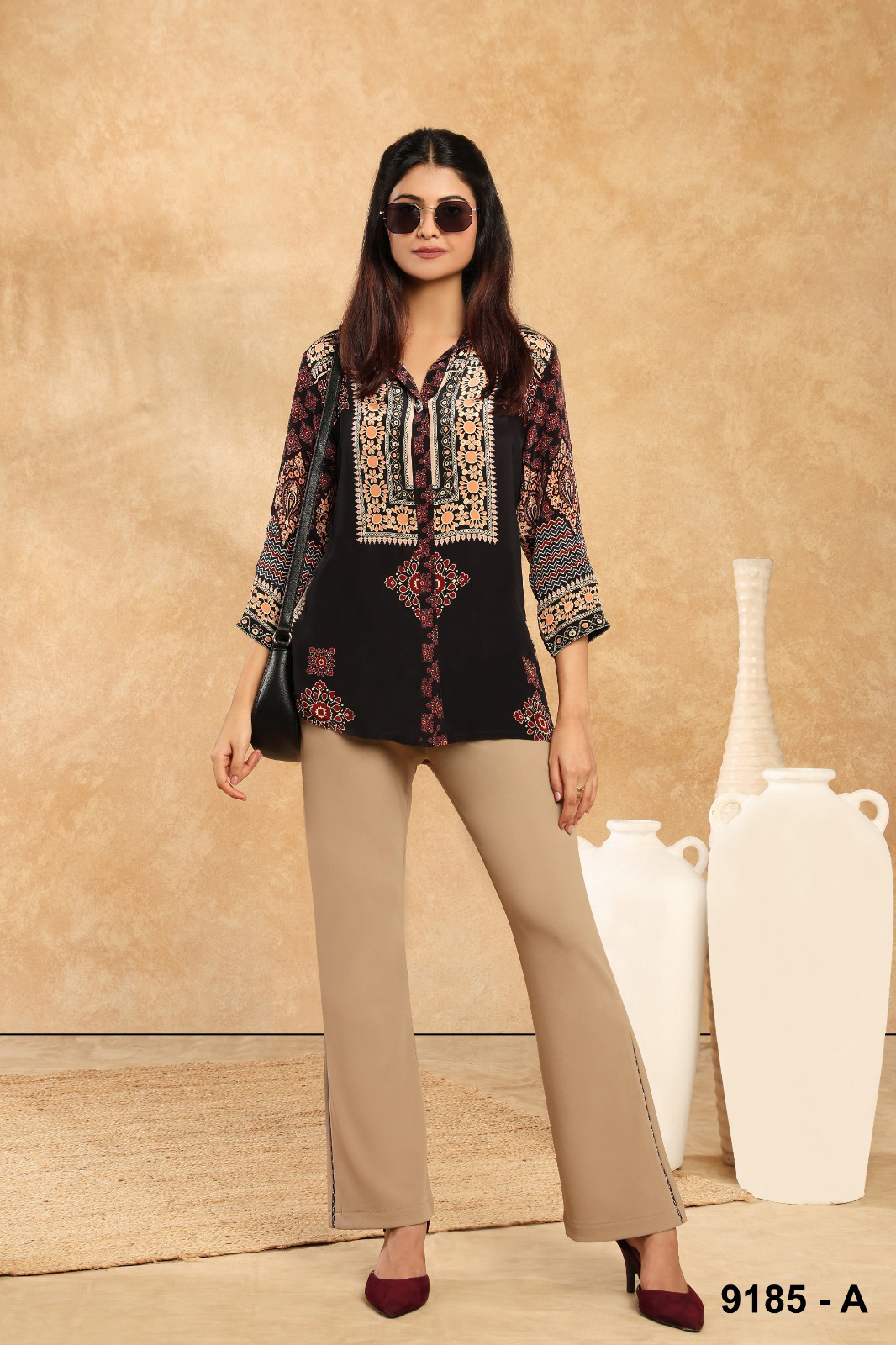
Model in sunglasses wearing a black tunic top with an ornate heritage-style printed yoke and panels in rust, ivory and wine, with three-quarter sleeves and beige flared trousers
Then & now Heritage-inspired ornament on a contemporary tunic shape.

The women’s top is so familiar that it is easy to forget it has a history at all. Yet the idea of a separate garment for the upper body — one that can be changed independently of a skirt or trouser — is a story of work, of independence, of new fibres and global exchange.

For much of history, many women in Europe dressed in one-piece gowns or in bodices that were fitted and fastened as part of a larger ensemble. In India, the picture was different and far more varied: draped garments such as the sari were worn with fitted bodices like the choli, and stitched tunics were part of many regional traditions. The modern top draws from all of these lines.

What follows is a short, general history. It is not exhaustive, and dates are approximate — fashion changes gradually and unevenly across places and communities. But the arc is clear: the top became more practical, more personal and more expressive with every generation.

Why it matters today

Understanding where a garment comes from changes how we wear it. A shirt collar once borrowed from menswear; a peasant blouse once worn for labour; a block print with centuries of craft behind it — each brings meaning to a contemporary wardrobe. The tops in the Options Mall edit carry these echoes, reshaped for the way women live now.

A timeline

The evolution of the top.

  1. Before the 1800s

    Bodices, chemises & drape

    In Europe, women commonly wore a linen chemise or shift as an undergarment beneath fitted bodices and gowns. In South Asia, draped garments were paired with fitted bodices and stitched tunics in a wide variety of regional forms. The upper-body garment was usually part of a whole, not a separate statement.

  2. 19th century

    The blouse gets its name

    The English word “blouse” comes from French, where it originally described a loose smock worn by workers and peasants. During the century the word, and the looser, separate garment it described, gradually entered women’s fashion.

  3. 1890s – 1910s

    The shirtwaist

    The shirtwaist — a tailored blouse modelled on the man’s shirt and worn with a skirt — became an emblem of the working, independent woman, particularly in the United States. It was mass-produced on a huge scale; the 1911 Triangle Shirtwaist Factory fire in New York, which killed 146 garment workers, became a landmark in the history of labour safety.

  4. 1910s – 1920s

    Ease & jersey

    Silhouettes loosened and corsetry declined. Coco Chanel is widely associated with bringing jersey, then a humble fabric, into women’s fashion, helping popularise relaxed, comfortable separates.

  5. 1930s – 1950s

    Separates & new fibres

    Rayon, the first widely produced manufactured fibre, made fluid, affordable fabrics available; nylon followed in the late 1930s and polyester was developed in Britain in 1941. American sportswear designers such as Claire McCardell championed practical, mix-and-match separates, and the idea of a wardrobe built from tops and bottoms took hold.

  6. 1960s – 1970s

    Freedom & folk influence

    Youth culture, the peasant blouse, the tunic and the kaftan reshaped everyday dressing. Indian cottons, block prints and embroidery were widely embraced in Western fashion, and loose, printed tops became symbols of a freer way of living.

  7. 1980s – 1990s

    Power & minimalism

    The 1980s brought strong shoulders and silky blouses for the office; the 1990s answered with minimalism — clean lines, neutral colours, slip-like fabrics and simple shells.

  8. 2000s – today

    Fusion & individuality

    The boundaries between casual and formal, Western and Indian, day and evening have blurred. Short kurtis worn with jeans, printed shirts with tailored trousers and satin tops with denim are all part of a contemporary wardrobe that values versatility and personal expression above rules.

I.

Clothing & self-expression

A top sits closest to the face, which makes it the garment most often read as a signal of who we are. Colour can signal mood; print can signal taste or heritage; shape can signal formality or ease. Choosing a top each morning is a small act of authorship — one that most women perform without thinking, and that fashion has always reflected back.

II.

Silhouettes over time

The history of the top is partly a history of where fabric is allowed to go. Fitted bodices gave way to loose blouses, then to tailored shirtwaists, then to relaxed jersey and back again. Today all of these coexist: the peplum recalls the fitted waist, the tunic recalls the long, loose line, and the wrap combines both.

III.

The influence of fabric innovation

New fibres changed what tops could do. Manufactured cellulose fibres such as rayon offered silk-like drape at lower cost. Synthetics brought durability, easy care and vivid, lasting colour. Modern digital printing has made complex, painterly and photographic prints possible on almost any cloth — which is why prints today can look like paintings.

IV.

Global fashion movements

Textiles have always travelled. Painted and printed Indian cottons, known in Europe as chintz and calico, were so popular in the seventeenth and eighteenth centuries that some European governments restricted their import to protect local industries. Traditions such as kalamkari and hand block printing continue to inspire designers worldwide, and contemporary prints often borrow freely from many cultures at once.

V.

The role of colour & pattern

Colour and pattern were once markers of wealth and status, because certain dyes and complex prints were costly to produce. As manufacturing advanced, they became tools of personal expression available to far more people. Today, the same shirt shape can feel serene in solid teal or exuberant in patchwork — colour does as much as cut to define character.

VI.

Comfort & style

For much of the twentieth century, comfort and elegance were treated as opposites. Modern dressing has largely retired that idea. Fluid fabrics, relaxed cuts and thoughtful construction mean a top can look refined and still allow a woman to commute, work, travel and celebrate in the same day.

VII.

The modern wardrobe

The wardrobe of separates — tops, trousers, skirts and layers combined freely — is now the norm for many women. In that system, tops are the variable: a few good trousers paired with many expressive tops can create far more outfits than the number of garments suggests.

VIII.

Timeless versus trend

Trends move fast, often in a single season. The pieces that last tend to share a few qualities: a shape that has proven itself over time (the shirt, the wrap, the tunic), a colour or print the wearer genuinely loves, and enough quality of finish to survive many washes. Choosing with those in mind is the simplest form of sustainable style.

The top has travelled from smock to shirtwaist to satin wrap — and at every stage, women have made it their own.

A note on sources

This essay is a general overview written in Options Mall’s own words, summarising widely documented fashion and textile history. It contains no quotations from experts or designers. For deeper reading, the dress and textile collections of major museums are excellent starting points:

From history to your wardrobe

See how these ideas live on in the collection.