Women’s tops · Vile Parle West, Mumbai

Cloth, construction & care

Fabrics, Textures & Craftsmanship

How a top feels, falls and lasts is decided long before it reaches a hanger — by the fibre, the weave, the finish and the way it is sewn. This is a guide to all of it.

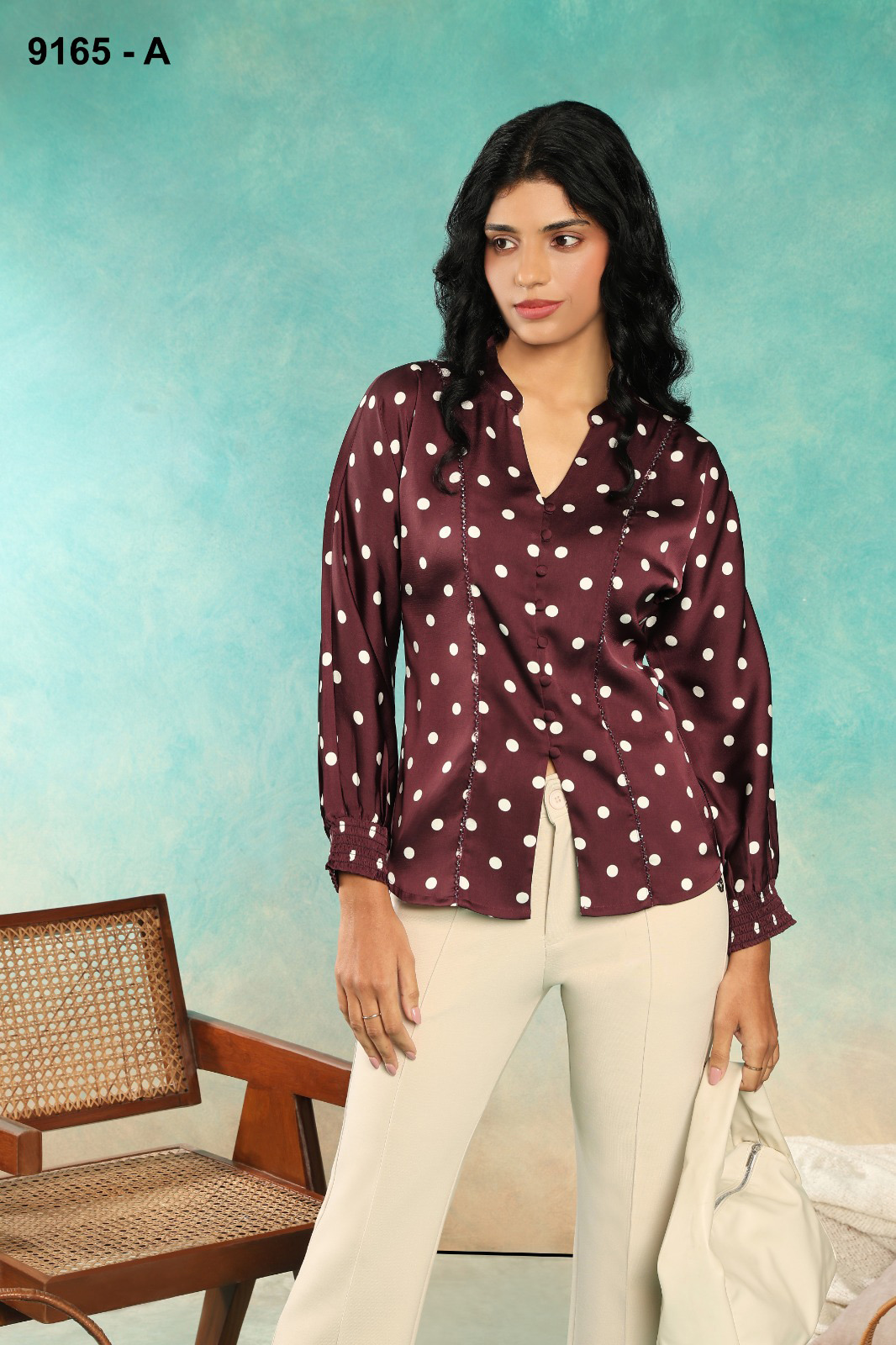
Model in a burgundy shirt with white polka dots and a lustrous satin-like finish, V-neck and long sleeves with gathered cuffs, worn with ivory trousers
Surface Wine-ground polka dots with a liquid sheen.
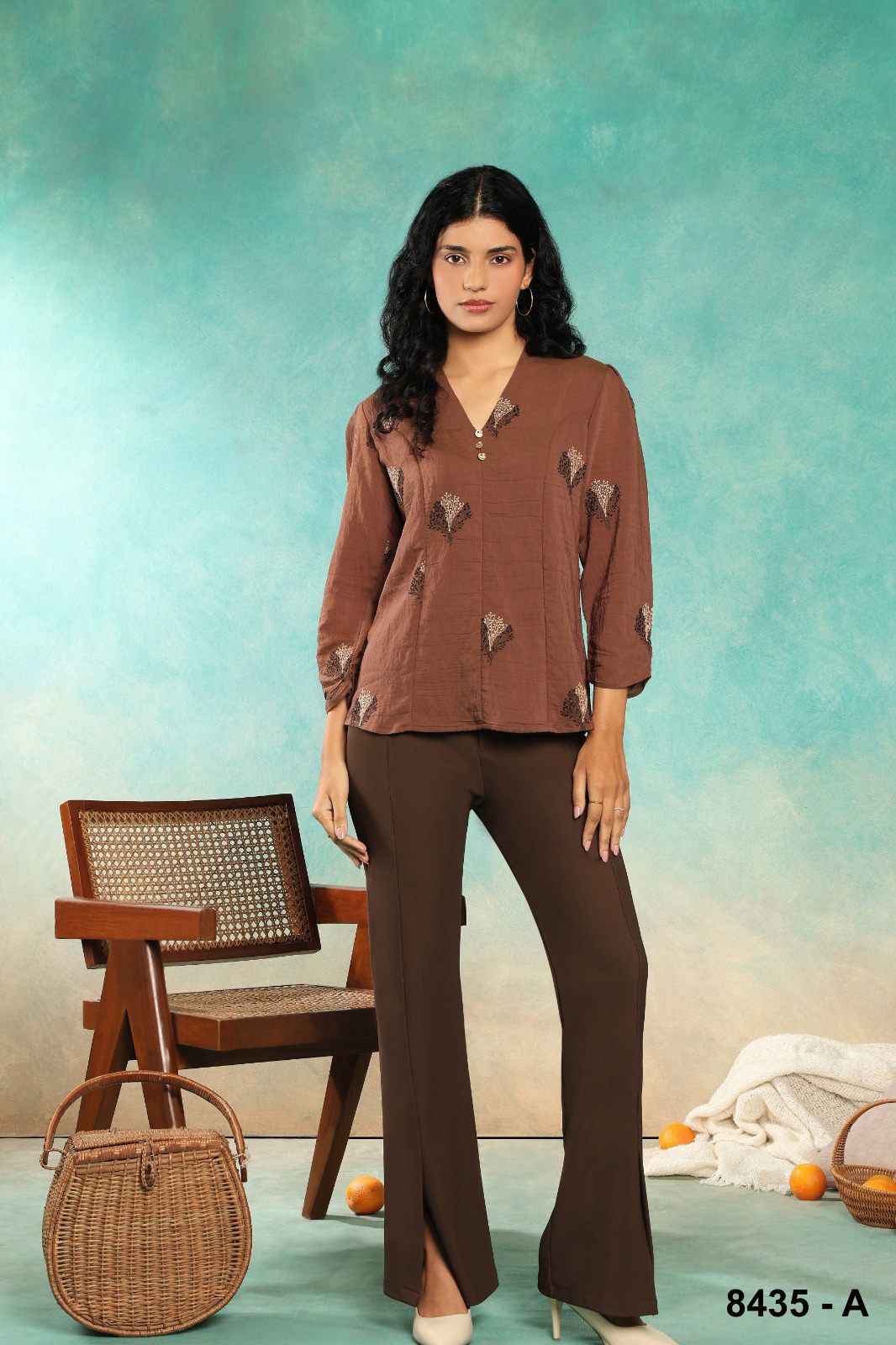
Model in a cocoa-brown top with a fine woven texture and scattered small motifs, V-neck and roll-up sleeves, with chocolate flared trousers beside a cane chair
Texture A matte, finely textured cocoa ground — the opposite of satin’s shine.

Part one — The Cloth

Seven ways to read a fabric.

Compare the two tops on this page: one glossy and fluid, the other matte and grounded. Both are beautiful; they simply speak differently. Here is the vocabulary.

01

Texture

Texture is how a surface looks and feels: smooth, slubbed, crinkled, ribbed, pebbled. It comes from the yarn (a fine, smooth filament or a thicker, irregular spun yarn) and the weave or knit. Matte, textured surfaces tend to look relaxed and hide creasing well; smooth surfaces look polished and show colour with great clarity.

02

Weight

Fabric weight is often expressed in grams per square metre (GSM). Lighter fabrics — voiles, georgettes, fine lawns — feel airy and may be sheer. Mid-weight shirtings and crepes are the backbone of most tops. Heavier cloths hold structure and suit tailored shapes. Weight affects warmth, opacity and how a top hangs.

03

Drape

Drape describes how a fabric falls under its own weight. Fluid fabrics such as viscose, crepe and satin-weave cloths flow into soft folds and follow the body; crisper fabrics such as poplin and linen stand away from it and hold a shape. Wraps, cowls and flared sleeves usually need good drape; structured collars benefit from crispness.

04

Breathability

Breathability is how well air and moisture pass through a fabric. Natural and cellulose-based fibres such as cotton, linen and viscose generally absorb moisture and feel cooler in humid weather. Fully synthetic fabrics like polyester absorb little moisture, so they can feel warmer, though they dry quickly. Weave matters too: an open, loose weave breathes more than a dense one.

05

Comfort & Movement

Comfort comes from fibre, weight and cut together. Knits and fabrics with a little elastane stretch with the body; woven fabrics rely on ease built into the pattern, such as pleats, gathers and roomier sleeves. When trying on a top, reach forward and lift your arms: a well-cut top moves with you without pulling across the back or at the buttons.

06

Surface Finishes

Finishes change the way cloth reflects light. A satin weave produces a smooth, lustrous face; a crepe produces a softly grained, matte one. Treatments such as peaching or sanding give a soft, suede-like hand, and digital or screen printing adds pattern to the surface. A sheen makes colours look deeper and richer, and also shows every fold.

The fibre guide

What tops are made of.

These are the fibres most commonly used in women’s tops, with their general characteristics. Always check a garment’s own label for its exact composition and care instructions.

General characteristics only. Fabric performance also depends on yarn, weave, weight and finish. This guide does not describe the composition of any specific Options Mall garment.
FibreOriginFeel & drapeIn warm weatherCare notes
CottonNatural plant fibre from the cotton bollSoft, versatile; from crisp poplin to fluid voileAbsorbent and breathable; a long-standing choice for hot climatesGenerally easy care; may shrink or crease. Follow the label.
LinenNatural fibre from the flax plantCrisp, textured, with a characteristic slubHighly breathable and quick to feel coolCreases readily, which is part of its charm; softens with washing.
Viscose / RayonRegenerated cellulose, typically made from wood pulpSmooth, fluid, excellent drapeAbsorbent and comfortableWeaker when wet; often benefits from gentle washing and no wringing.
ModalA type of regenerated cellulose fibreVery soft, smooth, fluidBreathable and comfortableGenerally more stable when wet than standard viscose.
PolyesterSynthetic fibre derived from petrochemicalsCan imitate silk, crepe or satin; holds colour wellAbsorbs little moisture, so may feel warmer; dries fastDurable and wrinkle-resistant; avoid high heat when ironing.
SilkNatural protein fibre produced by silkwormsLustrous, smooth, luxurious drapeLight and comfortableDelicate; often hand wash or dry clean as the label directs.
BlendsTwo or more fibres combinedBalances properties, e.g. cotton with polyester or elastaneDepends on the blendFollow the label; blends often improve easy care or stretch.

Satin is a weave

Not a fibre. Satin’s long surface floats create its sheen, and it can be woven from silk, polyester, viscose or blends.

Crepe

A fabric with a grainy, crinkled surface from twisted yarns or the weave. Matte, with good drape.

Georgette & chiffon

Light, sheer fabrics with a delicate drape; georgette has a slightly grainier, crepe-like texture.

Poplin

A tightly woven plain-weave fabric with a smooth, crisp hand — the classic shirting.

Part two — The Construction

Where quality becomes visible.

Turn a top inside out and it tells you how it was made. These are the details worth noticing.

08

Garment Seams

Seams join panels and must lie flat without puckering. Common finishes include overlocked (serged) edges; French seams, which enclose raw edges and are often used on sheer fabrics; and flat-felled seams, the strong, double-stitched seams traditional on shirts.

09

Neckline Construction

A neckline is usually finished with a facing, a binding or a collar. Good necklines keep their shape and sit flat against the body without gaping or rolling outward; a V-neck should meet in a clean, sharp point.

10

Sleeve Finishing

Sleeves end in a hem, a cuff, a binding or an elasticated or smocked edge. Look for even gathers, cuffs that sit symmetrically and roll-up tabs that hold securely when the sleeve is folded.

11

Stitching

Straight, even and consistent stitching is a quiet sign of care. Topstitching along collars, plackets and hems is both functional and decorative; contrast piping can outline a seam as a design feature.

12

Buttons & Fastenings

Buttons should be firmly attached and buttonholes neatly bound so they do not fray. A concealed placket hides the buttons for a cleaner front; loops, ties and hooks offer alternatives on wraps and necklines.

13

Pleats & Gathers

Pleats are folds of fabric stitched in place; gathers are fullness drawn up along a seam. Both add shape and movement, at a waistline, a yoke, a shoulder or a cuff. They should be evenly distributed and sit symmetrically.

14

Embellishment

Embroidery, appliqué, beading, lace insets and decorative trims add surface interest. Well-made embellishment is secure on the reverse and does not pull or stiffen the surrounding fabric.

—

A five-second check

Hold the top up to the light, look at the inside seams, test a button, check that prints align at the front opening, and see whether both cuffs match. You will learn more in those five seconds than from any label.

Part three — The Care

15. Care & longevity.

The most sustainable top is the one you keep wearing. A little care goes a long way — especially in Mumbai’s heat, humidity and monsoon months.

  1. Read the label first. The care label reflects the actual fibre, dye and finish; it overrides any general advice.
  2. Wash prints inside out in cool water to help protect colour and surface finishes.
  3. Be gentle with fluid fabrics. Viscose and satin-weave tops generally prefer a gentle cycle or hand wash; avoid wringing.
  4. Dry in the shade. Strong direct sun can fade colours over time, particularly deep wines, teals and plums.
  5. Dry thoroughly in the monsoon. Humid air slows drying; make sure tops are fully dry before storing to avoid musty odours and mildew.
  6. Iron on the reverse at the temperature the label allows; use a pressing cloth or steam for satin finishes to avoid shine marks.
  7. Hang structured tops on shaped or padded hangers so collars and shoulders keep their line; fold knits.
  8. Mend early. Re-secure a loose button or a lifting seam as soon as you notice it.

Next

Now add colour: explore the palette and prints of the edit.