Sleeveless
Cut-in or wide straps leave the arms free. The coolest option for heat; easy to layer under jackets and shirts.
Women’s tops · Vile Parle West, Mumbai
Shape, sleeve & line
Before colour, before print, there is shape. This is a guide to how women’s tops are cut — and how each outline changes the way an outfit looks and feels.
01 — Relaxed Silhouettes
A relaxed top skims the body rather than following it. The fabric falls from the shoulders and moves independently as you walk.
Relaxed silhouettes include straight-cut shirts worn loose, tunic-length tops, boxy shapes and tops with dropped shoulders or wide sleeves. Their appeal is practical as much as aesthetic: in a warm, humid city like Mumbai, air circulating between body and cloth is a real comfort.
The key to wearing relaxed shapes well is balance. A loose top usually looks most intentional with a more streamlined bottom — a slim straight trouser, a flare that is fitted through the thigh, or a column skirt. A half-tuck at the front can introduce a waist without losing the ease.
02 — Structured Silhouettes
Structure in a top does not have to mean stiffness. Often it comes from seams, darts, pleats and the way panels are joined.
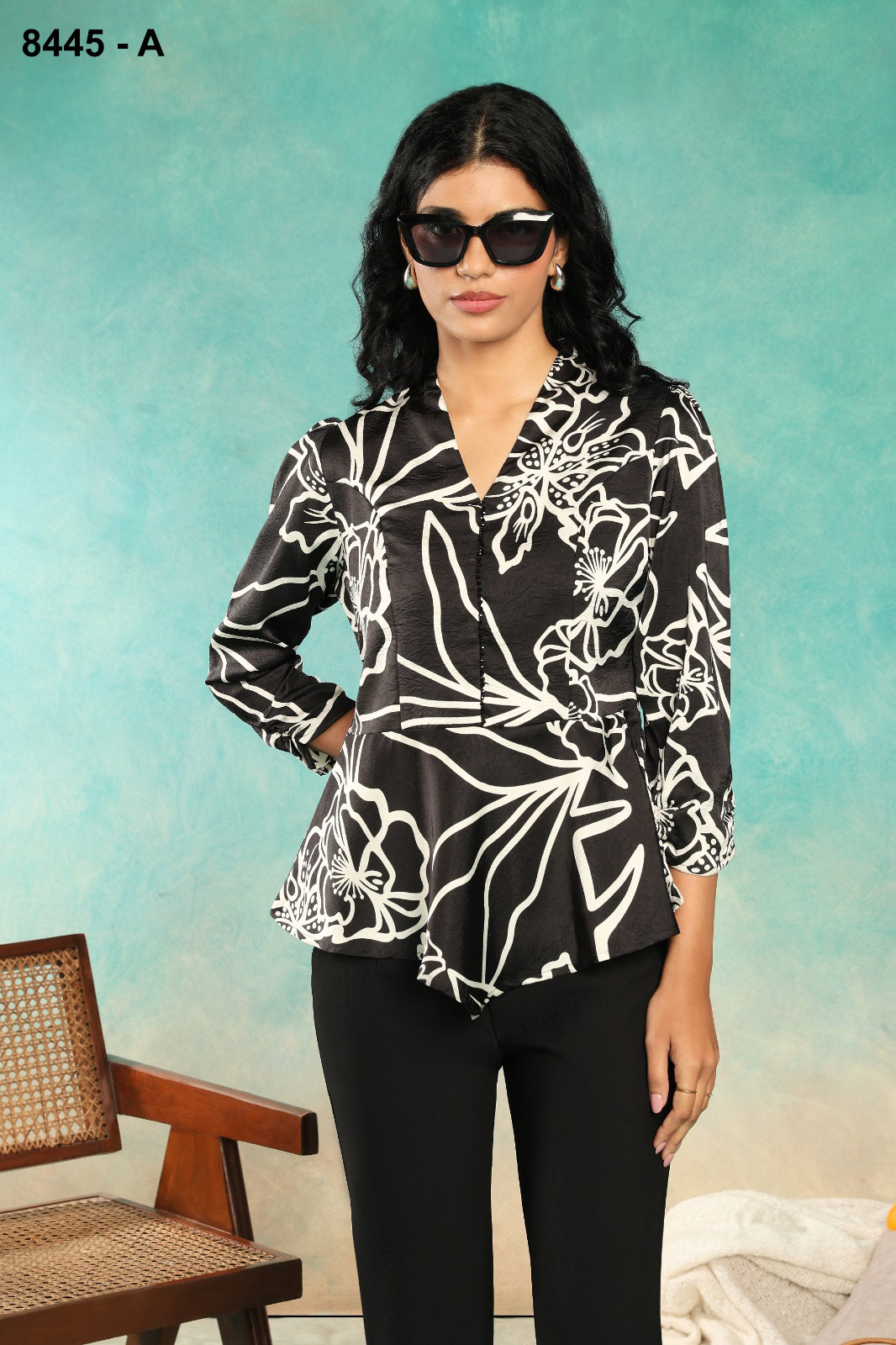
The peplum is the clearest example. The bodice is shaped close to the body, then a flared panel — or a gathered or pleated skirt section — is attached at or just below the natural waist. The result is a defined waist and a gentle flare over the hip, achieved entirely through cut. The top pictured on this page combines that peplum with a V-neck and three-quarter sleeves, so the shape is framed at every edge.
Other structured details include princess seams that curve over the bust, back darts, fitted cuffs and wrap fronts that pull in at the waist. Structured tops tend to look polished with very little effort, which makes them strong choices for work and occasions.
03 — Minimal Styles
Minimal does not mean plain. It means every element has been chosen, and nothing is there by accident.
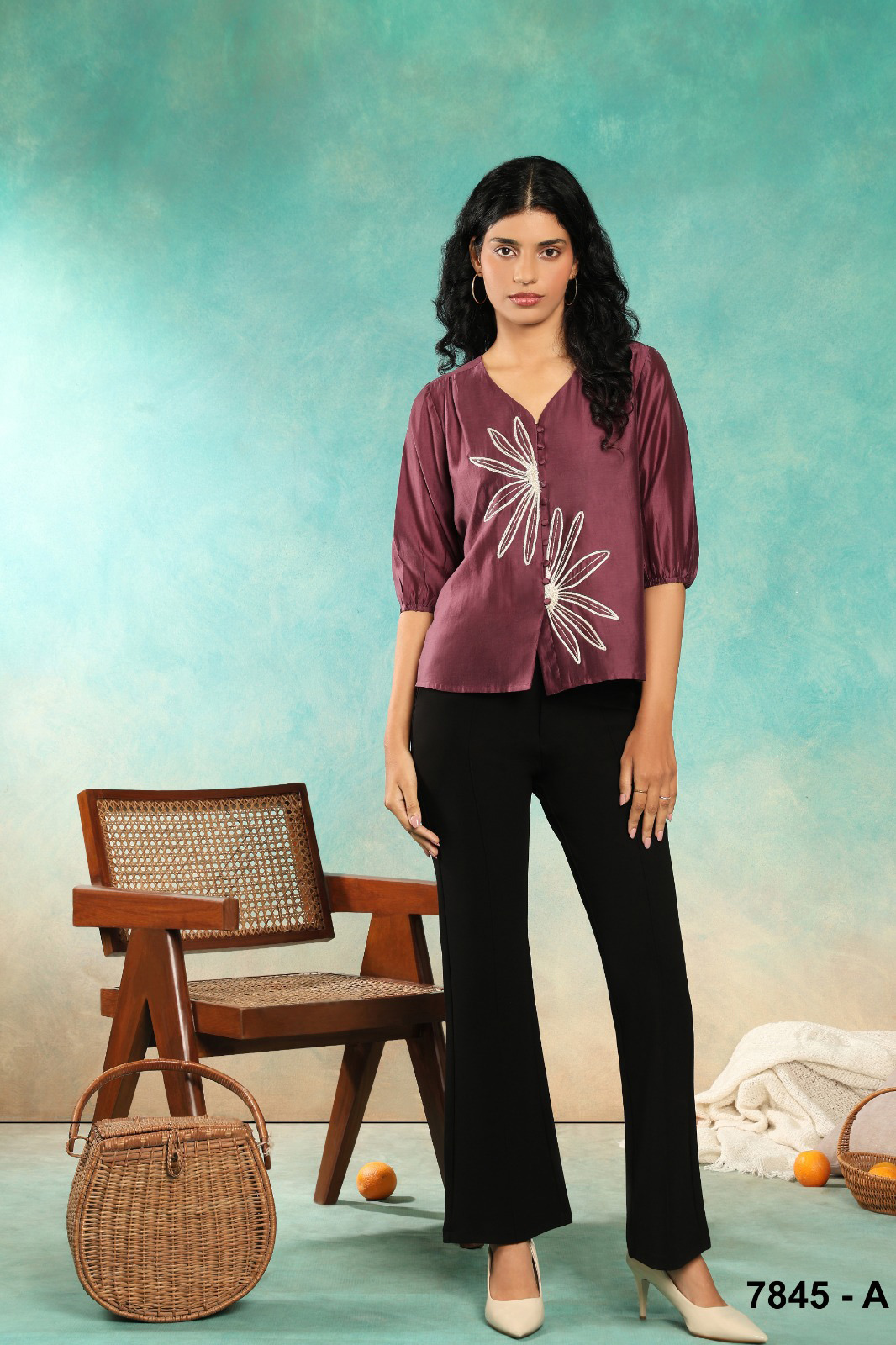
The plum top here is a lesson in restraint. A solid, softly lustrous ground; a single white flower drawn in a few confident lines; a V-neck; sleeves gathered into a gentle puff at the shoulder and finished above the elbow. From across a room it reads as a calm block of colour. Up close, the motif and the sleeve give it character.
Minimal tops are the hardest-working pieces in a wardrobe because they pair with almost anything: printed trousers, denim, a tailored jacket, statement earrings. When the top is quiet, the rest of the outfit can speak — or the whole look can stay serene.
04 — Contemporary Statement Styles
A statement shape usually exaggerates one feature — a dramatic sleeve, a deep peplum, an asymmetric hem — and keeps everything else simple. One focal point reads as confident; several compete.
Placement prints, contrast panels and patchwork layouts can create the illusion of structure on a simple shirt shape, drawing lines across the body that a seam might otherwise make.
A high-sheen finish catches light and exaggerates every fold, so even a familiar shirt shape feels more dramatic. It is an easy way to dress a silhouette up.
Statement styles work best with grounded partners: trousers in a solid colour, simple footwear and one considered accessory. See them across the Style Gallery and in the Colours & Prints editorial.
05 — Sleeve Variations
Sleeves change how formal a top feels, how cool it wears and how it layers. These are the variations most often seen in women’s tops, including several pictured on this website.
Cut-in or wide straps leave the arms free. The coolest option for heat; easy to layer under jackets and shirts.
Ending on the upper arm. Practical and relaxed, and polished when the hem is neatly finished or cuffed.
Fullness gathered at the shoulder or cuff creates soft volume, as on the plum top above. Romantic, but easily modern.
Ending between elbow and wrist. It shows the wrist — ideal for bracelets and watches — and stays cool.
Narrow at the upper arm, widening towards the hem. It adds movement and drama, as on the tunic tops in the edit.
Wrist-length, often finished with a buttoned, gathered or smocked cuff. The most polished option, and easy to roll.
06 — Neckline Variations
The neckline is the frame closest to your face. It affects how jewellery sits, how a top layers and how open or composed an outfit feels.
Draws the eye vertically and elongates the neck. Pairs naturally with pendants and layered chains.
A round neck with a central slit. Relaxed and open, it suits printed and tunic-length tops especially well.
Pointed collar and button stand. Crisp and versatile — worn buttoned for polish or open for ease.
A short standing band without points. Clean and contemporary, often with a split or concealed placket.
One panel crosses over the other, forming a V that continues to the waist. Defines shape through construction.
A simple curve at the base of the neck. Understated, easy under jackets, and a clean canvas for necklaces.
07 — Length & Proportion
The length of a top decides where the body is visually divided. Moving that line by a few centimetres can change the whole proportion of an outfit.
Next